
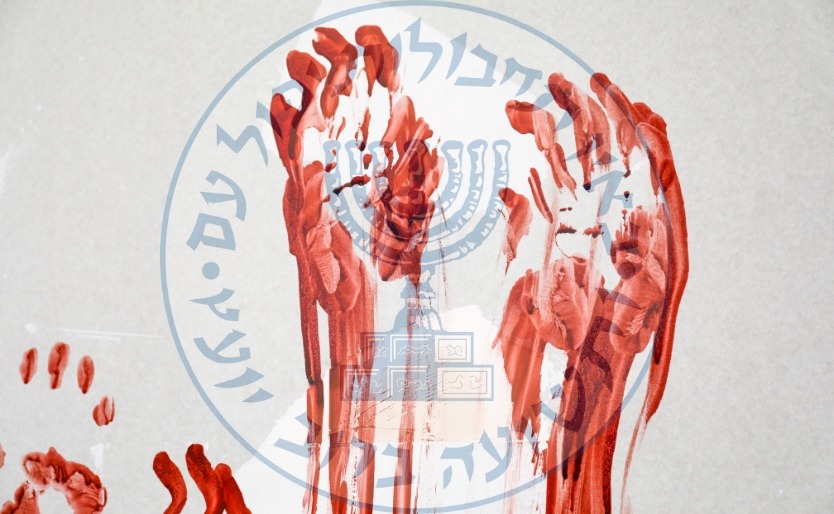
“We are fighting a fierce war, as was the case fifty years ago,” Israel’s Mossad chief David Barina said Wednesday, referring to the so-called “Munich attack” that was followed by a series of assassinations of Palestinian leaders that Israel said were behind the planning of the attack that killed 11 Israeli athletes in Germany to participate in the 1972 Olympics.
What are the most prominent Israeli assassinations of Palestinian leaders?
Israel excels in the number of assassinations over any other country, ignoring international agreements, treaties, laws, and charters.
Scientists and Writers
The assassinations were not limited to military leaders and activists, as they affected political leaders, scholars and writers, and Israel did not differentiate in the scenes of assassination between an Arab or foreign country, friend, or enemy.
Often, Israel does not officially acknowledge its responsibility for cross-border assassinations, and recognition usually comes through Israeli journalists, writers, and media, after years of liquidation.
In July 1972, Israel assassinated Palestinian writer and journalist Ghassan Kanafani, by blowing up his car in Beirut with an explosive device.
In March 1979, the Israeli intelligence service (Mossad) assassinated the leader of the Popular Front, Wadih Haddad, in an East German hotel, by placing a quantity of poison in one of his favorite chocolate bars.
Intensive Operations
During the establishment of the PLO leadership in Lebanon and then Tunisia between the 1970s and 1980s, the Mossad assassinated political and military leaders, most notably: Khalil al-Wazir, Salah Khalaf, Kamal Adwan, Abu Yusuf al-Najjar, Hayel Abdul Hamid, and others.
In October 1995, Mossad sent Kidon, its best assassination unit, to Malta, where it dispatched the former secretary-general of the jihadist movement, Fathi Shakaki, with gunshots to the head.
In January 1996, Israel assassinated Yahya Ayyash, the engineer of the Qassam Brigades (the military wing of Hamas), by remotely detonating a cell phone he was using in a house in northern Gaza.
In February 1992, Israel assassinated Hezbollah Secretary General Abbas al-Musawi by shelling his car with rockets in the town of Tuffahta (southern Lebanon), killing him, his wife, and his son.
Ascending curve
With the outbreak of the Al-Aqsa Intifada in 2000, a new phase of escalation of armed action, led by Palestinian factions, began.
Led by Ariel Sharon, Israel assassinated dozens of faction leaders and intifada activists.
Among the most prominent political figures assassinated in this era are: Hamas leader Sheikh Ahmed Yassin, his successor in Gaza, Abdul Aziz Al-Rantisi, the Secretary-General of the Popular Front Abu Ali Mustafa, and the two leaders in Hamas: Ismail Abu Shanab and Ibrahim Al-Makadmeh, Jamal Mansour, and Jamal Salim.
It also assassinated dozens of military leaders, most notably the leaders of the Al-Qassam and Al-Aqsa Brigades: Salah Shehadeh, Adnan Al-Ghoul, Mahmoud Abu Al-Hunoud, Raed Al-Karmi, and Jihad Al-Amarin.
For two years, Israel besieged Palestinian President Yasser Arafat in Ramallah until he died under mysterious circumstances in November 2004, after being transferred for treatment in France.
Medical examinations and newspaper investigations reported that the cause of death was an injection of the poisonous polonium.
Reactivation
During the last decade, in Benjamin Netanyahu’s second term as prime minister, Israel has activated assassinations through the Shin Bet and the Mossad.
In January 2010, Mossad assassinated the leader of the Qassam Brigades, Mahmoud Al-Mabhouh, in a hotel in Dubai.
During the wars on Gaza in 2008, 2012, and 2014, Israeli aircraft assassinated leaders of Hamas, namely: Saeed Siyam and Nizar Rayan, as well as military leaders: Ahmed Al-Jabari, Raed Al-Attar, and Muhammad Abu Shamala.
In Bulgaria, Mossad assassinated former PFLP activist Omar Nai, who was found dead inside a car on February 26, 2016.
In December 2016, Mossad assassinated Tunisian engineer Muhammad al-Zawari in front of his house in the city of Sfax, by shooting him by Mossad elements.
Later, it was announced that Zouari belonged to the Qassam Brigades, and supervised the drone manufacturing project.
Malaysia was not spared from the Mossad, as Fadi al-Batsh, an electrical engineer and academic close to Hamas, was assassinated on its soil on April 21, 2018.
Failed Operations
Despite the great success of most of the assassinations, some of them failed; in September 1997, Mossad tried to assassinate the head of the political bureau of Hamas at the time, Khaled Mashaal.
The Kidun cell injected Mashaal with a poisonous substance, after which he remained in intensive care. The unit was exposed, and two of its members were arrested, which angered the then King of Jordan, Hussein bin Talal, who insisted on handing Israel the anti-venom serum to save Mashaal’s life, and he had.
Over thirty years, Israel failed to assassinate the commander-in-chief of the Qassam Brigades, Muhammad Al-Daif, in Gaza. Where it tried three times to get rid of him with aerial bombardment, and the most recent of these attempts was in the 2014 war, in which his child and wife were killed, and the guest is still alive.
Questioning the feasibility of the assassination
Israel’s reliance on assassinations is because it is a proactive policy that thwarts armed operations that were about to kill Israelis, according to Israeli expert Eli Ashkenazi.
Former Shin Bet chief Yoram Cohen says assassinations are often an effective weapon at the leadership levels of Palestinian organizations.
But he believes that the great missile capabilities of the Palestinians in Gaza “make us deterred from carrying out immediate assassinations against their leaders.”
Israeli expert Ronen Bergman criticized the continued reliance on assassinations. As he believes that they achieve objectives tactically, but this ultimately led to a strategic failure, saying that achieving strategic objectives is done with statesmanship and political discourse, not with special operations.
Israeli writer Nati Yavit concludes that the effectiveness of assassination is still limited in terms of weakening Palestinian organizations. Assassinations work with small organizations, but the assassination of political leaders seems more dangerous and impactful because it is considered a violation of general rules.
Leave a Reply