
A Warning That Cannot Be Ignored
When the leader of Turkey’s main opposition party takes his warning not to an Ankara rally but to the pages of an American magazine, the world should pay attention. On 1 June 2026, Özgür Özel, the embattled head of the Republican People‘s Party (CHP), published an opinion piece in Newsweek under the stark title: “Turkey’s Democratic Crisis Is Becoming a Security Crisis.” This was not a routine appeal for sympathy. It was a calculated geopolitical alarm, aimed at capitals from Brussels to Washington.
For years, Özel wrote, international observers treated the erosion of democracy in Turkey as a “troubling but primarily internal matter”. That era is over. What is now unfolding, he argued, has “implications far beyond our borders” and should concern anyone who cares about the long‑term stability of Europe, NATO, the Black Sea, the Eastern Mediterranean and the Middle East. The reason is brutally simple: Turkey is too strategically important to become politically unstable.
This article examines the origins of the crisis, the stakes as articulated by Özel, the government’s counter‑narrative and the profound international repercussions that are only beginning to be felt.
I. Anatomy of an “Absolute Nullity”
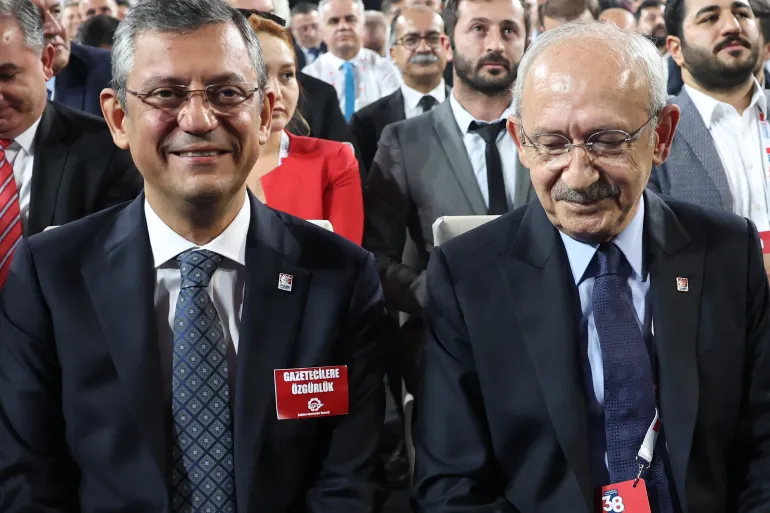
The immediate trigger was a decision by the Ankara Regional Court of Justice on 21 May 2026. The court invoked the extraordinary doctrine of “absolute nullity” to annul the CHP’s 2023 party congress, which had elected Özel as its leader. The ruling suspended Özel and his entire executive board, and provisionally reinstated the party’s former chairman, 77‑year‑old Kemal Kılıçdaroğlu – a man who had led the CHP for 13 years but lost the 2023 presidential election to President Recep Tayyip Erdoğan and was subsequently voted out as party leader.
The court cited allegations of “irregularities and vote‑buying” among delegates, overturning a lower court ruling from 2025 that had dismissed those claims. For Özel and his supporters, this was not a correction of internal party flaws. It was a “judicial coup” – an unprecedented intervention by the state to overturn a legally elected opposition leadership. “Today, there has been an attempted coup against the party founded by Mustafa Kemal Atatürk,” Özel told a crowd outside CHP headquarters. He later added bitterly: “These coup plotters don‘t come with tanks, cannons or camouflage; they come in judges’ and prosecutors‘ robes.”
The timing was no coincidence. The ruling came after a series of legal blows against the CHP, including the imprisonment of Ekrem İmamoğlu, the popular mayor of Istanbul and the opposition’s de facto presidential candidate, on corruption charges that critics say are politically fabricated and that carry a theoretical sentence of more than 2,000 years in prison. Since 2025, around 20 CHP mayors and hundreds of municipal officials have been detained or imprisoned, often without final convictions.
II. From Domestic Politics to a Security Crisis
In his Newsweek essay, Özel deliberately shifted the frame. He argued that the crisis is no longer merely a matter of human rights or constitutional law. It has become a security crisis for the entire region.
“Turkey is too strategically important to become politically unstable,” he wrote. “What is unfolding in Turkey today should concern not only those who care about democracy, but also those who care about the long‑term stability of Europe, NATO, the Black Sea region, the Eastern Mediterranean and the Middle East.”
He detailed the government’s strategy: having captured much of the state apparatus, Erdoğan’s administration is now attempting to “eliminate the last meaningful democratic alternative”. When the CHP won a historic municipal victory in 2024 – becoming Turkey’s leading political force for the first time in decades – the government responded not with political competition but with intensified judicial intervention.
The ultimate goal, Özel warned, is not merely to weaken the opposition but to reshape it from within. By reinstating a discredited former leader who lost 13 consecutive elections, the government aims to replace the real opposition with a “managed and compliant one”. If this succeeds, Turkey would face a scenario unprecedented in its modern history: deep popular discontent, a severe legitimacy crisis and no institutional mechanism for peaceful change. “When those pathways disappear,” Özel concluded, “political frustration does not disappear with them. It builds beneath the surface until it erupts.”
III. The Government‘s Counter‑Narrative
The Turkish government rejects the opposition’s characterisation. Justice Minister Akin Gürlek – a former chief prosecutor who spearheaded investigations against İmamoğlu – insisted that the court’s decision “demonstrates that democracy’s self‑correcting mechanisms and the rule of law are functioning”. A spokesperson for Erdoğan’s AK Party echoed that view, asserting that the judiciary is independent and that the ruling simply corrects internal party irregularities.
From this perspective, the government’s legal campaigns against CHP officials are not political purges but routine anti‑corruption measures. Gürlek has publicly stated that İmamoğlu’s trial is a matter of justice, not politics. The government also notes that Erdoğan remains constitutionally limited – he can only run again if early elections are called or the constitution is amended – and that the next presidential vote is still scheduled for 2028.
Nevertheless, the cumulative effect of the crackdown is hard to ignore. Since 2024, hundreds of CHP members and elected officials have been detained on charges ranging from corruption to links with the outlawed PKK – charges the party vehemently denies. International observers have repeatedly raised concerns about the erosion of judicial independence and the use of lawfare to neutralise political rivals.
IV. International Reactions: EU Alarm, NATO Realpolitik
The European Union, Turkey’s long‑standing membership candidate, responded with alarm but limited action. The European Committee of the Regions issued a statement expressing “serious concerns regarding the functioning of democratic opposition” and “full solidarity with Mr Özgür Özel”. It warned that judicial actions affecting political competition “risk undermining confidence in democratic governance”. The European Commission likewise raised concerns over the rule of law, judicial independence and democratic pluralism, insisting that opposition parties must be able to operate freely without fear of repression.
Yet Brussels has few effective levers. Turkey remains a critical partner for the EU on migration, energy security and counter‑terrorism. The diplomatic language is careful, and concrete sanctions are unlikely.
NATO’s calculus is even more pragmatic. As Özel noted in his Newsweek essay, Turkey commands the second‑largest army in the Alliance, controls the strategically vital Turkish Straits, and hosts key bases for operations in the Middle East and the Black Sea. Despite rhetorical concerns about democratic backsliding, NATO’s operational needs outweigh its normative commitments. Secretary‑General Mark Rutte recently reaffirmed that “NATO will always do what is necessary to defend Turkey”.
The United States, for its part, has shown no appetite for a rupture with Ankara. Washington continues to rely on Turkey’s cooperation on Syria, Iran and regional stability. The muted response to the CHP crisis suggests that, for Western capitals, strategic interests supersede democratic principles.
V. A Fragmented Opposition: The Peril of Managed Democracy
The court ruling also exposed deep fissures within the CHP. While Özel has refused to leave the party or form a breakaway group – he declared that “tenants leave, homeowners stay” – Kılıçdaroğlu has already begun asserting his reinstated authority, removing lawyers who filed appeals and contacting former allies to form a new executive council. This internal conflict, deliberately engineered or not, risks splitting the largest opposition force in Turkey, leaving it paralysed ahead of a potential snap election.
Özel has called for a solution, urging that the party’s leadership should be decided by a direct vote of its 2 million members. He hopes that Kilicdaroğlu “will not attempt to lead a party he was not democratically elected to head”. But with the courts and the government aligned against him, his options are narrowing.
As Özel himself warned, the real danger is not just the erosion of electoral democracy but the removal of any credible pathway for peaceful change. If political frustration has no outlet, it accumulates underground until it explodes. That explosion would not be contained within Turkey’s borders.
A Crossroads for Turkey and the West
Özgür Özel’s warning in Newsweek is not hyperbole. Turkey is at a critical juncture. The government has moved from repressing the opposition to attempting to reshape it from within – a strategy that, if successful, would eliminate any meaningful political alternative.
The West faces a difficult choice. Publicly, it can continue issuing statements of concern. Privately, it must decide whether Turkey’s strategic importance justifies acquiescing to the dismantling of its democratic institutions. The answer will determine not only the future of Turkish democracy but also the stability of a region already shaken by war, migration and economic turbulence.
As Özel concluded in his essay: “If Erdoğan succeeds in dismantling meaningful opposition, for the first time in modern history, Turkey would face deep popular discontent, a severe legitimacy crisis, and no meaningful institutional mechanism through which citizens could peacefully change their government. That is not a democratic crisis. That is a security crisis – for all of us.”
Sources & References:
Özgür Özel, “Turkey’s Democratic Crisis Is Becoming a Security Crisis,” Newsweek, 1 June 2026.
“Republican People‘s Party absolute nullity crisis,” Wikipedia.
“Turkish opposition fights court ousting of leaders in ruling boosting Erdoğan,” BBC News.
“Court ruling adds to crackdown on Turkey’s main opposition CHP,” Reuters.
“Erdogan Is Forcibly Designing His Own Opposition,” Foreign Policy.
“Turkish court ousts CHP leadership amid opposition crackdown,” Al‑Monitor.
European Committee of the Regions, statement on CHP ruling.
“Turkey’s democratic crisis is becoming a security crisis,” Newsweek opinion.
#Turkey #ÖzgürÖzel #DemocraticCrisis #CHP #Erdoğan #SecurityCrisis #NATO #Newsweek
Leave a Reply