
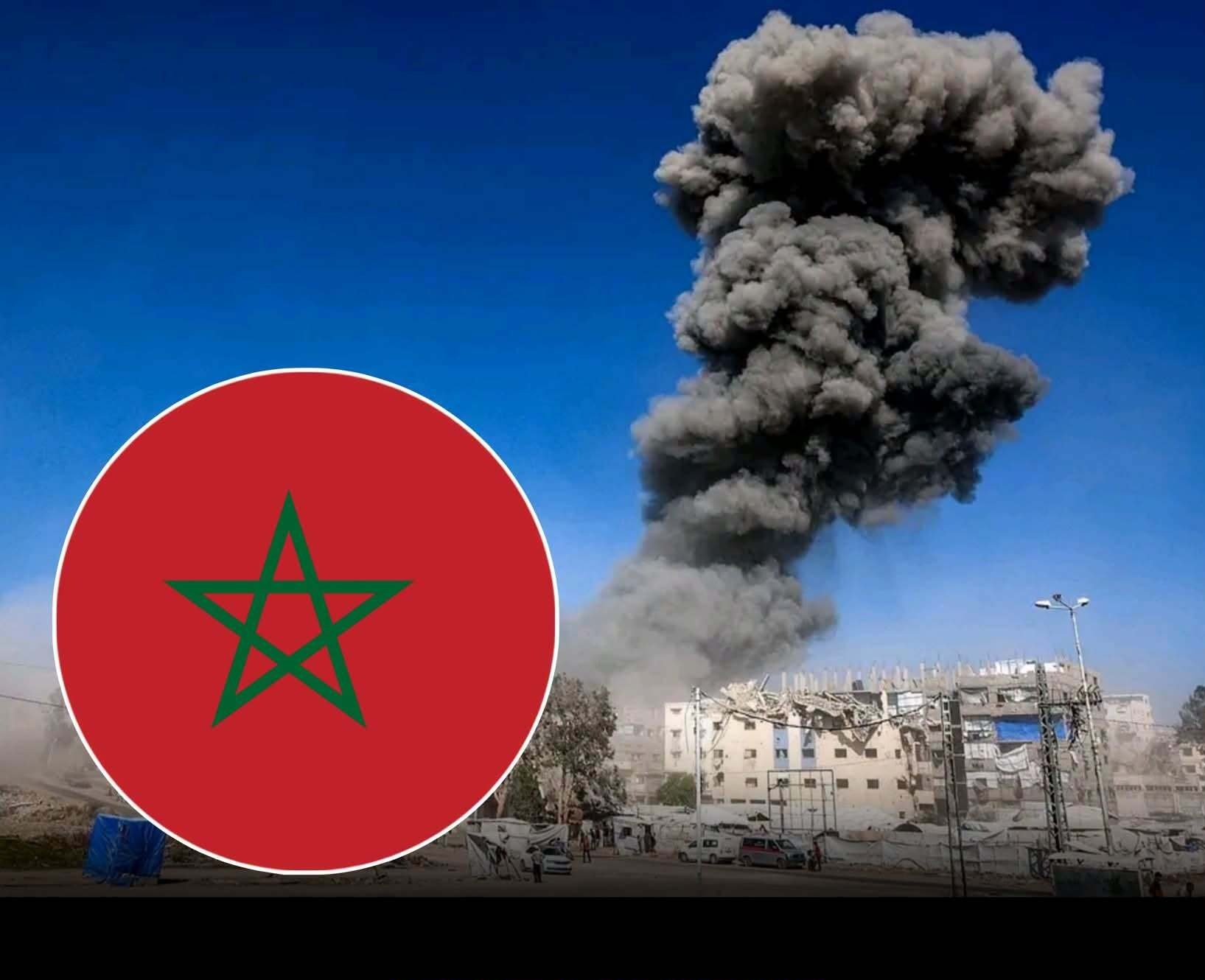
After months of delay, the Kingdom’s formal entry into the US-led International Stabilization Force gives the faltering Gaza peace initiative its first real lifeline, but the obstacles ahead are immense.
The US peace plan for Gaza, announced with great fanfare in September 2025, has spent the better part of a year foundering in a quagmire of broken timelines, diplomatic reticence, and the grinding realities of a war that refuses to end. On 16 July 2026, that plan received its most significant boost since its inception: Morocco formally signed its Participating Country Agreement with the International Stabilization Force (ISF). For the US-backed Board of Peace, this was “a long-expected development that is key to helping the Board continue to move forward in Gaza”.
The signing ceremony in Rabat, attended by Foreign Minister Nasser Bourita, Defence Minister Abdellatif Loudiyi, and Board of Peace envoy Nickolay Mladenov, was more than a mere diplomatic formality. It marked the moment when one of the Arab world’s most strategically significant states—a member of the Abraham Accords, a close US ally, and the custodian of Jerusalem’s Islamic holy sites—publicly committed its military and humanitarian resources to a project that many others have shunned. Under the accord, Morocco will deploy senior military officers, gendarmerie and police personnel to the force’s joint command, and establish a military field hospital in Gaza. “Moroccan forces will support humanitarian aid delivery to Gaza and help train the Palestinian Police Force,” the Board of Peace announced.
Yet the question that now hangs over the white-walled conference rooms of Rabat and Washington is whether this commitment is a genuine turning point or merely a symbolic gesture in a plan that is rapidly losing credibility.
The Moroccan calculus: Why Rabat stepped up when others stepped back
Morocco’s decision to join the ISF cannot be understood without examining the kingdom’s unique geopolitical position. As a member of the Abraham Accords (joining after the UAE and Bahrain in 2020), Rabat maintains formal diplomatic relations with Israel while simultaneously upholding its long-standing commitment to a two-state solution and its role as chair of the Al-Quds Committee. This dual posture gives Morocco a degree of credibility with both Washington and the Palestinian Authority that few other Arab states can claim.
More importantly, Morocco brings something to the table that the US-led plan desperately needs: operational experience and regional legitimacy. As the Washington Institute’s Salma Annasse recently noted, Morocco has developed a state-led religious rehabilitation model over the past two decades that could be directly applicable to Gaza’s post-conflict challenges. The kingdom’s experience deradicalising extremist elements through regulated clerical training and community outreach—developed in response to the 2003 Casablanca bombings—has already been exported to West Africa and the Sahel. “Given Rabat’s strategic relationships with Washington and Jerusalem and its demonstrated experience dealing with extremism, it may have a useful role to play in implementing a critical plank of the U.S. plan,” Annasse writes.
The timing of Morocco’s commitment is also significant. Of the five countries that had originally pledged troops to the ISF, Indonesia has put its offer on hold due to regional instability. Albania, Kazakhstan, and Kosovo remain committed, but Morocco’s entry signals that the kingdom is willing to shoulder political risk when others are retreating. The Board of Peace and the ISF were quick to express gratitude, thanking King Mohammed VI for “Morocco’s unwavering dedication to regional stability, security, and for leading with action to support the people of Gaza”.
The plan’s impossible arithmetic
For all the diplomatic fanfare, the harsh reality is that the US peace plan remains an exercise in aspirational logistics. The original blueprint called for a 10,000-strong international force—a figure later inflated to 20,000 by some accounts. In January, US officials claimed the ISF would begin deploying in early 2026. As of mid-July, the actual deployment consists of a small Moroccan delegation of 10 to 20 soldiers, initially based at a logistics hub on the Israeli side of the Kerem Shalom Border Crossing. The base inside Gaza that is meant to accommodate about 5,500 ISF personnel has not yet been built.
As the Wall Street Journal recently reported, the timeline for the Moroccan deployment has been “muddied and extended to sometime in the next few months”. The mission itself remains vaguely defined: the first batch of ISF troops is meant to help secure a pilot humanitarian zone in Rafah, but even that modest objective is mired in delays. Construction on the Emirati-funded compound has not begun, with Gaza land surveyors blocked from reaching the area by Hamas operatives.
The Palestinian question: A plan without consent
Perhaps the most fundamental challenge is the one that has shadowed the peace plan from its inception: the absence of Palestinian consent. The New Arab reported that Morocco has signed up to a security blueprint that “still lacks Palestinian consent and the conditions for deployment on the ground”. Hamas continues to control an estimated 30-40% of the Gaza Strip, and some 2 million civilians remain under its rule. Negotiations remain deadlocked over Hamas disarmament, with Israel refusing to step back without “visible progress” on that condition and Hamas rejecting disarmament as a precondition.
Meanwhile, Israel has expanded the areas under its direct military control, pushing the so-called “Yellow Line” further west so that by May it held around 60% of the enclave. The Israeli government has since ordered the army to move towards 70%, declaring everything east of the line a free-fire zone. This territorial expansion directly contradicts the peace plan’s core premise of an Israeli withdrawal.
A milestone, but for whom?
Morocco’s commitment to the ISF is undoubtedly a milestone for the US peace plan, but it is a milestone that raises more questions than it answers. Does it signal genuine momentum, or is it merely a face-saving measure for a plan that is losing its grip on reality? The Board of Peace has approached around 70 countries to contribute troops, yet only a handful have committed, and several of those commitments have frayed as the political and security costs have become clearer. The US has secured pledges worth roughly $17 billion at a February Board of Peace meeting, but translating those pledges into on-the-ground action remains a distant prospect.
As the Jerusalem Post analysis noted, the US administration has many issues on its plate: the ongoing conflict with Iran, Lebanon-Israel talks, and efforts to restrain Israeli policy toward Syria. “Helping Israel get out of wars on several borders and helping bring peace to people in Lebanon, Gaza, Syria, and the region is hard work,” the analysis observes. The Board of Peace is one part of this effort, but it is a part that has yet to prove its operational viability.
Morocco’s participation is a significant validation of the US-led approach, but it is also a reminder of how far the plan still has to go. The kingdom’s forces will support humanitarian aid delivery, help train the Palestinian Police Force, and provide a military field hospital. These are tangible contributions, but they are a far cry from the comprehensive security and governance transformation that the peace plan envisions.
The question now is whether Morocco’s commitment will catalyse further international participation or whether it will remain an isolated act of diplomatic courage in a plan that is struggling to stay afloat. For the civilians of Gaza, who have endured more than two years of devastating war, the answer cannot come soon enough. But as the months drag on and the obstacles multiply, one thing is becoming increasingly clear: even a milestone as significant as Morocco’s entry cannot, by itself, build a road to peace through a landscape still scarred by war.
Sources:
The Jerusalem Post, “Why Morocco’s commitment is a major milestone for the US peace plan in Gaza – analysis,” 16 July 2026
The New Arab, “Morocco signs up to Gaza security plan Palestinians rejected,” 16 July 2026
Democrata.es, “Morocco joins the International Stabilization Force in Gaza,” 16 July 2026
Outlook India, “Morocco Joins International Stabilization Force for Gaza,” 16 July 2026
The Washington Institute, “How Morocco’s Religious Rehabilitation Model Could Help Gaza,” July 2026
The Times of Israel, “Report: US struggling to deploy 20 foreign Gaza peacekeepers after pledging 20,000,” 10 July 2026
L’Opinion, “Plan de paix à Gaza : Les enjeux de la participation marocaine (Décryptage),” 21 January 2026
Leave a Reply