
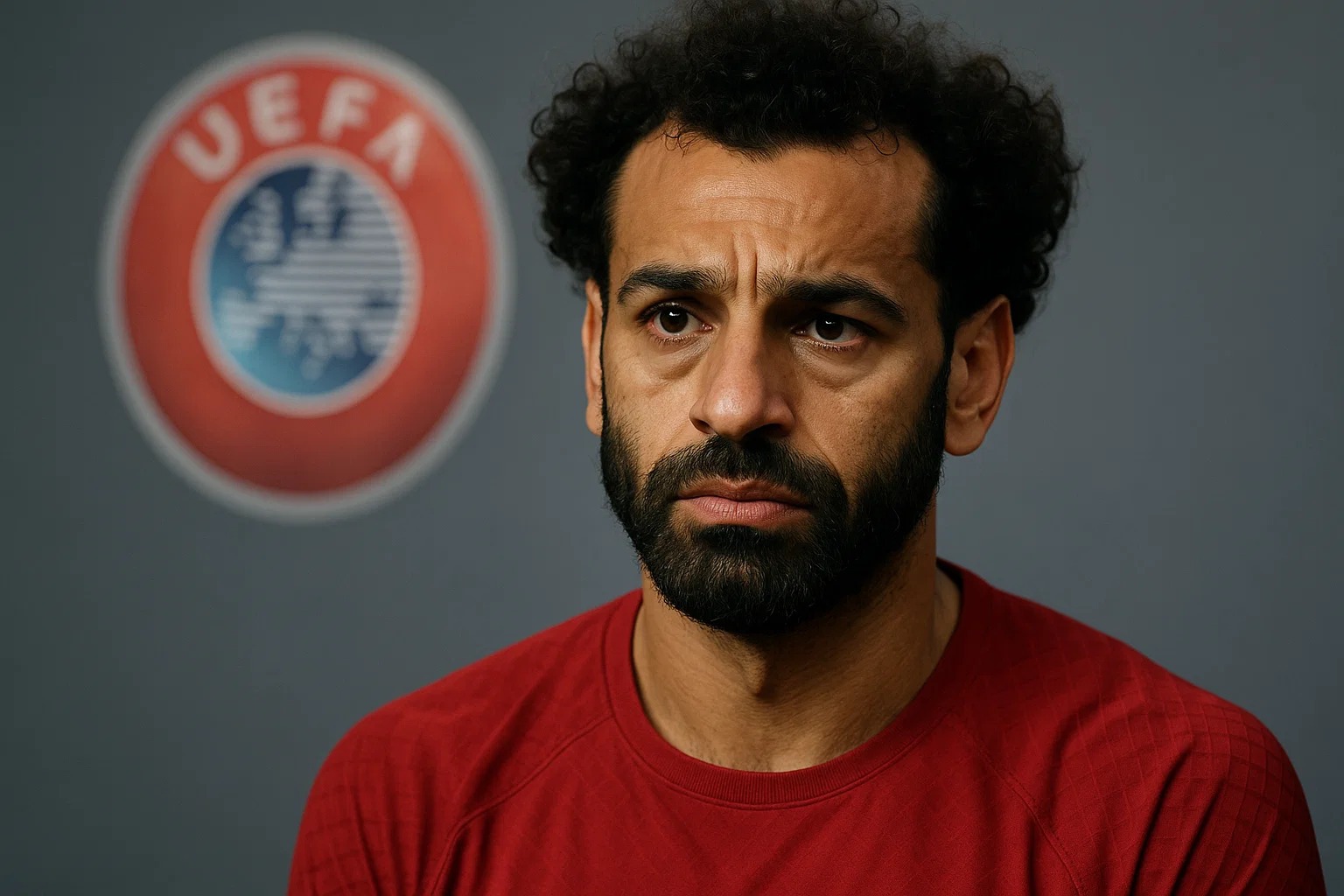
From the Pitch to the Global Stage
In the world of football, some stars shine with their goals, and others shine far beyond the pitch. Mohamed Salah, Liverpool’s Egyptian king, has long been celebrated for his scoring prowess and dazzling footwork. But his latest move wasn’t a goal — it was a statement.
After months of criticism from fans and activists for not speaking out strongly enough about the ongoing humanitarian crisis in Gaza, Salah finally broke his silence. His latest post wasn’t just an opinion — it was a direct, emotional challenge to the Union of European Football Associations (UEFA), one that turned into a trending topic across England and the wider football community.
The Moment That Sparked the Storm
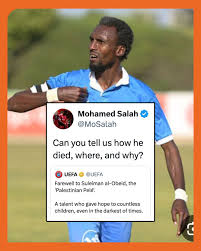
During a UEFA tribute ceremony honoring football legends who had passed away, Palestinian icon Suleiman Al-Obeid, known as the “Palestinian Pelé,” was briefly acknowledged. Yet, UEFA’s message was short and stripped of context — there was no mention of how or where he died.
Salah, a player who has never shied away from humanitarian causes, took to X (formerly Twitter) with a concise but powerful question:
“Can you tell us how he died, and where, and why?”
The post quickly went viral. It was not just a call for answers — it was a subtle yet pointed critique of how sports organizations often sidestep politically sensitive truths, even when other leagues, such as La Liga, have openly expressed solidarity in conflicts like Ukraine vs. Russia.
A Widow’s Response That Stole the Headlines
While UEFA remained silent, Al-Obeid’s widow, Doaa Al-Obeid, delivered a poignant reply to Salah:
“Mohamed Salah asked how and why he died? I want to tell him… Suleiman was martyred because he went out to earn a living for his children.”
Her words humanized the tragedy, cutting through the diplomatic language that often clouds such stories.
From the Stands to the Headlines
International outlets wasted no time amplifying the message :
Reuters called Salah’s post a “direct and courageous criticism.”
The Guardian described it as “turning a cold tribute into a global conversation about justice and transparency.”
Within hours, hashtags supporting Salah dominated social media. Support poured in from fans across cultures and languages — many praising his courage, others urging sports organizations to break the wall of political silence.
The Humanitarian Side of the Superstar
This wasn’t Salah’s first show of solidarity with Palestine. In previous statements, he called for humanitarian aid to reach Gaza and shared heartfelt messages about the suffering of civilians.
His impact extends beyond football — academic studies have shown that Salah’s positive image has helped reduce anti-Muslim sentiment in England, with measurable drops in hate crimes and online hate speech among Liverpool fans.
The Big Question: Can Sports Stay Out of Politics?
Salah’s tweet reignited the age-old debate: Should sports and politics remain separate?
In an era of 24/7 media and global social platforms, the answer is increasingly clear — “No!”. Modern athletes are more than just players; they are cultural ambassadors whose voices can cut through political noise and influence public opinion on a global scale.
Beyond the Final Whistle
Mohamed Salah didn’t need to retire to cement his legacy as more than a footballer. His post might not instantly change UEFA’s stance, but it reshaped the conversation: behind every tribute lies a story that deserves to be told with honesty.
As Salah’s career continues, one truth stands out — real greatness isn’t just measured in goals scored, but in the courage to take a stand when it matters most.
Leave a Reply