
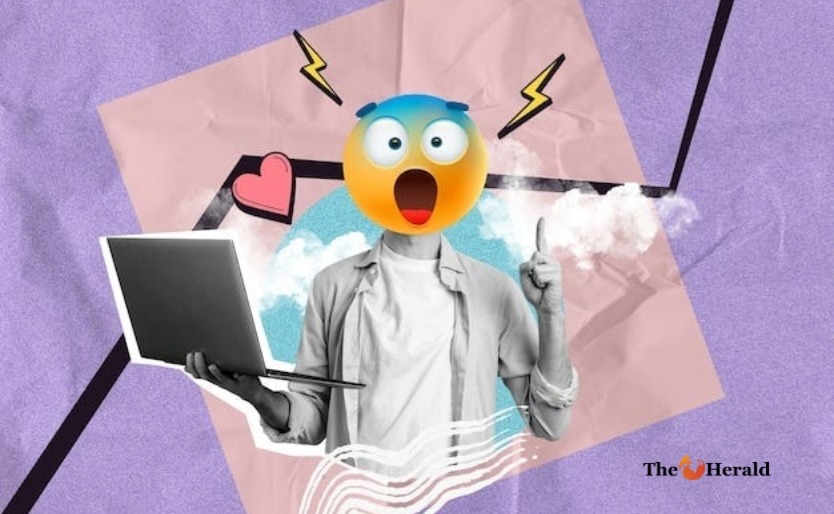
What throws you a wave as you look at social networking sites in their diversity is our affliction today with the huge amount of its fixed and moving parts, and here I mean the image taken through photographers and cameras, and those that turn into videos. The picture has become a spoken word that reveals thousands of meanings that may not always be revealed. In explaining it, it may need a long-term discussion, waiting for our time to have a “Lector in Fabula” in the expression of Umberto Eco, who explores the text regardless of its length and its hidden and apparent meanings.
Here, I do not distinguish between a passionate reader, who removes the surprise of the text, which he has a continuous habit, and a “non-reader”, so to speak - and most of them are today - but what I do see is that the majority today is overwhelmed by the “dictatorship of the image”, as some of them wish or refuse it.
Language is constantly a container for the contents of the soul and sensations, and it is an expression of the words that we turn into a text through which we discover the excitement of life by exploring the non-verbal and turning it into a operative, which is a journey more like life after death, or, say, it is a bridge of meaning between two worlds; virtual-perceptible and realistic-perceptible.
The poverty that beats us after all this fierce battle that we are waging with the reality of the image, both symbolic and profound, is a reality that we cannot jump on as the Olympic champion does, nor is it the easy thing that can be remedied in the next few years, especially with the speed of the strong winds in the progress of the means of communication and their involvement in the vast and innumerable oceans of artificial intelligence.
To find today a poor expression, but rather a generation the majority of which suffers from the difficulty of expressing what it encounters, whether in writing, speech, protest, emotion or other expressions, will unfortunately remain with it trapped in the corner of the souls and the virtual space, and perhaps it gives us from today this distortion that we notice when we encounter a citizen in the street or a video of a citizen or a citizen saying flat and strange words, but their expression does not exceed the limits of some superficial or naive words by the majority, or that are not enough to truly express the phenomenon or problem or hardly reach the desired goal at least appropriately.
Here we return to the idea of reading, awareness and linguistic richness, which are the things that we miss today or almost lose. Neither language, nor the previous awareness of language is conscious, but only fast, consuming and sometimes strange words that can only help us understand who speaks them, and never help us understand their logic. Rather, they refer us to an inevitable issue, which is the poverty of the linguistic balance, which is extreme poverty of a new kind waiting for real support.
Whoever reads discovers, and whoever actually reads expels the blur, and whoever does not do so is inevitably like a citizen trapped in a flask thrown in the floats of the oceans. He is hardly clear and cannot understand his world, but he is inevitably a stranger to his world, even if he has a smartphone or a high-class television screen or any other medium between him and his world.
From all of the above, the bitter truth is evident among the crises of the century besides desertification, drought and climate change, as well as expressive/linguistic change, including the need to accelerate the study of the phenomenon of poverty/linguistic retention. Our citizen no longer speaks understandable language, nor does he become aware of the world in his understandable and incomprehensible language, and this is another crisis/crises.
Umberto Eco says that the writer is the one who brings the audience to engage in his/her world, not the other way around, that is, the writer should not be at the request/mercy of the masses, neither the masses will learn, nor the writer will benefit, and here I do not mean fame or money in their form today, but I mean real fame, not fake, and this is what the image does, but comes exactly opposite.
The linguistically poor is a person who is unable to express, because he does not read and has only a share of the incomplete image, especially with the ferocious attack of the media, entertainment and social communication, where it is required and urgent in today’s world to understand the terms of experience, modernity, geopolitical, economic, social and cultural, even sports and others. It is strange that the speech that is going on is mostly hollow, misleading, and sometimes absurd, especially with the rise of political populism in the world, as well as the emergence of the era of triviality and flattening.
We should only conclude with work and hope, and it must return to the language of its prestige and strive and find (from the grandfather) himself a citizen and the generation of today/tomorrow in order to liberate his language from the virtual prison and globalization/bad stereotyping, and to illuminate the ignorance of the shallow balance of his dictionary with the lantern of knowledge, questioning and discovery, and science is only curiosity, but it is one of the best/finest types of curiosity, in the face of apostasy, regression, and decline.
Leave a Reply