
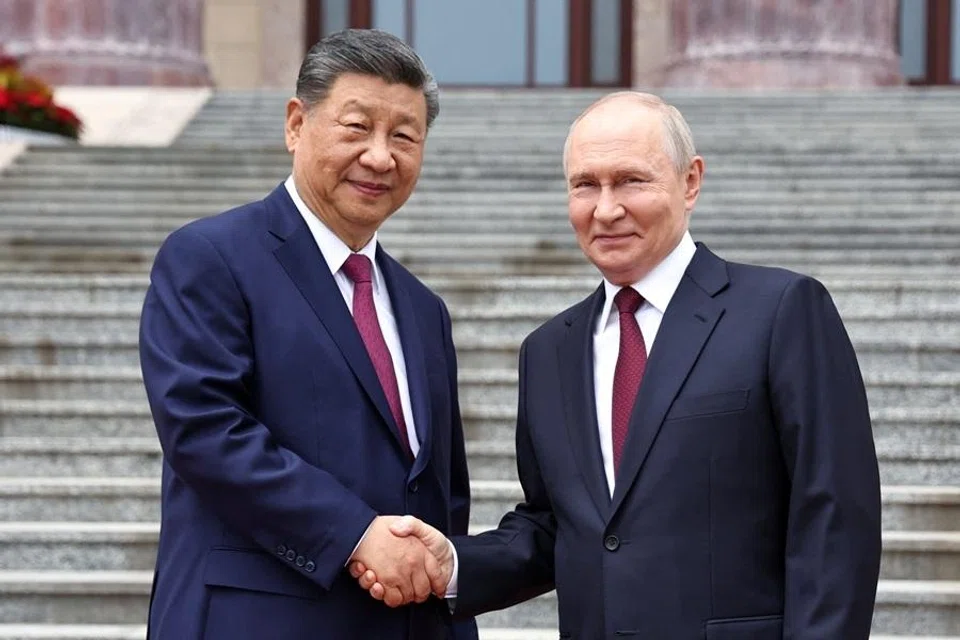
The bilateral alignment between Vladimir Putin and Xi Jinping has evolved from a marriage of convenience into a structural cornerstone of 21st-century geopolitics. Putin’s strategic focus on Beijing underscores a deliberate, long-term pivot to the East, designed to permanently counter Western economic isolation and institutional hegemony. This relationship, famously termed a “no-limits” partnership, has solidified into a highly sophisticated mechanism of mutual survival and systemic revisionism. For Moscow, Beijing is no longer just a diplomatic ally; it is the ultimate economic lifeblood, providing a massive market for Siberian hydrocarbons and a critical backchannel for dual-use technologies that keep the Russian industrial apparatus functioning under unprecedented global sanctions.
From a strategic perspective, Beijing’s calculus is deeply rooted in the concept of strategic depth. While Xi Jinping carefully navigates the threat of Western secondary sanctions on Chinese financial institutions, the Chinese leadership views Russia as an indispensable buffer against the United States’ Indo-Pacific containment strategy. By securing its northern frontier and guaranteeing a steady, overland supply of cheap energy that cannot be blockaded by the U.S. Navy in the Malacca Strait, China frees up its geopolitical capital to project power into the South China Sea and Taiwan.
However, this alliance is inherently asymmetrical. The economic gravity has shifted decisively toward Beijing, rendering Moscow the junior partner in an economic ecosystem increasingly dominated by the Chinese Yuan. Academic observers note that this partnership is reshaping global trade routes, forcing the acceleration of alternative financial messaging systems to bypass SWIFT, and cementing an alternative, autarkic trade bloc spanning from the Baltic to the Pacific. As the two nations deepen their joint military exercises and high-tech cooperation, the West faces a formidable, unified Eurasian front determined to dismantle the post-Cold War international framework.
References
Reuters Report (May 2026): “China’s Xi, Russia’s Putin praise ties but see no energy headway at Beijing talks.”
The Guardian Analysis: “Xi prepares to welcome Putin to China four days after hosting Trump.”
The Mackinder’s Heartland Theory Framework: Strategic assessment of the un-blockadable Eurasian continental trade core.
Leave a Reply