
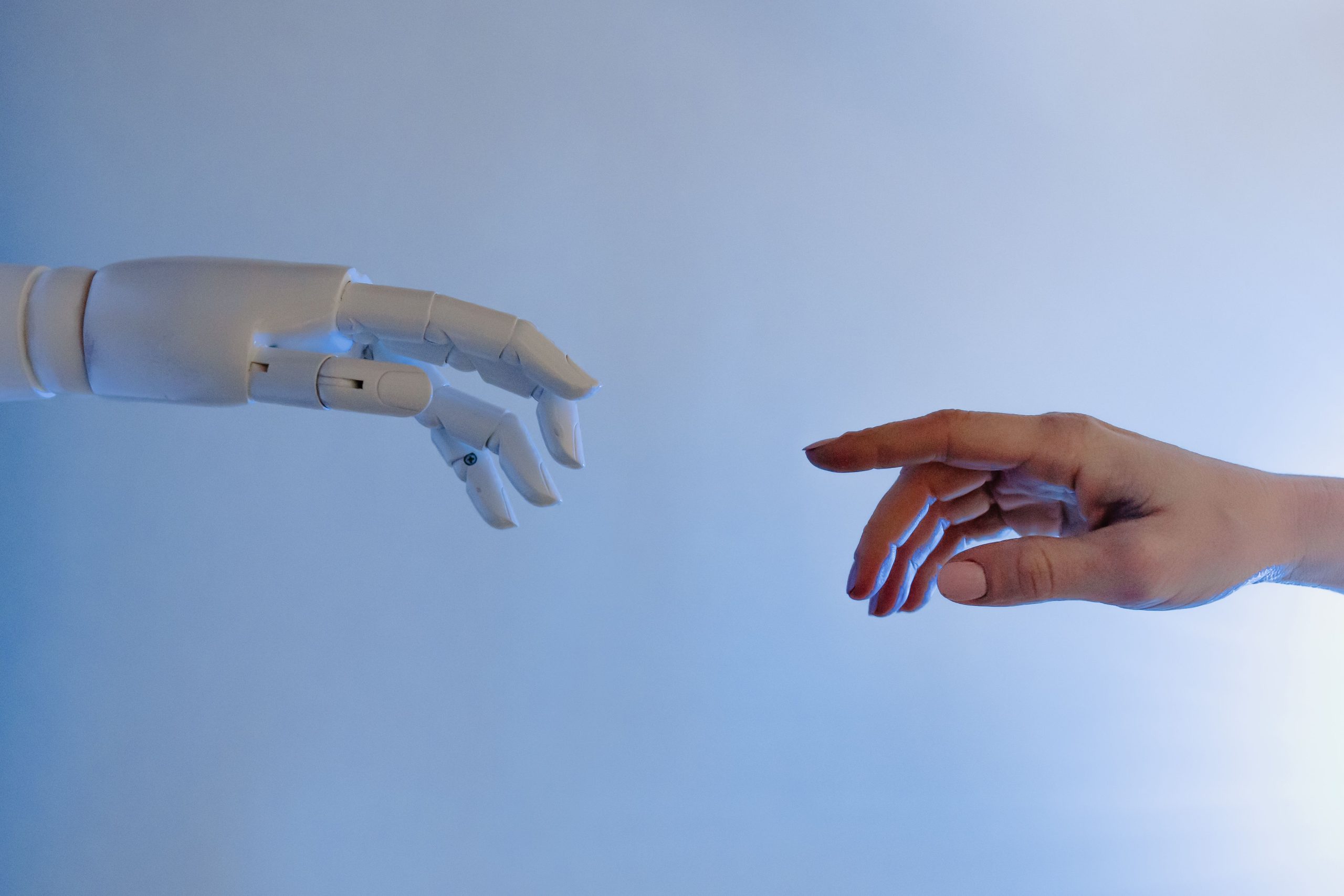
Are you worried that your job will be replaced by AI? Here are the 5 roles that experts say will become even more valuable in the age of intelligent machines.
2026 will go down as the year when the AI hype finally met reality. Yes, generative AI is automating more and more tasks, including complex ones like data analysis, translation, and even code writing. A 2026 study by Kookmin University in South Korea found that professions like translators, data scientists, and financial advisors are now considered highly vulnerable to replacement. At the same time, other jobs—professors, researchers, writers—were perceived as much safer.
But if you look closely, a clear pattern emerges. The jobs that will survive the AI wave are not those that fight the technology, but those that embrace it while doing what only humans can do: think creatively, solve complex problems, and, most importantly, connect with other humans on an emotional level.
Here are the top 5 professions that will not only survive the AI revolution but will likely thrive in 2026 and beyond:
1. Prompt Engineer
Prompt engineering is perhaps the most ironic new job of the AI era. It’s a role that exists precisely because AI is so powerful yet so literal. A prompt engineer doesn’t just ask a chatbot a simple question; they design intricate prompt systems that guide AI to produce accurate, relevant, and context-aware outputs. Top prompt engineers can earn over $300,000 a year. In essence, they are the translators between human intent and machine logic, a skill that will remain in high demand as AI models become more complex.
2. AI Ethicist
As AI systems become more integrated into decision-making—from hiring to loan approvals to criminal justice—the need for human oversight grows exponentially. An AI ethicist does not code the algorithms; they audit them for bias, fairness, and transparency. They ask the hard questions: Is this model discriminating against a certain group? Are we comfortable with the trade-offs between privacy and accuracy? This role requires a rare combination of technical knowledge, legal understanding, and moral reasoning – skills that no AI currently possesses.
3. Skilled Tradesperson
The doomsday scenario of complete automation often overlooks the physical world. AI cannot fix a leaky pipe, rewire a circuit breaker, or install a custom kitchen cabinet. The demand for electricians, plumbers, carpenters, and mechanics is not shrinking; in fact, it’s likely to grow as the population ages and fewer young people enter these fields. These jobs are secure because they require a mix of problem-solving, dexterity, and on-the‑spot adaptation to unique physical situations—tasks that are enormously difficult and costly for robots to perform at scale.
4. Healthcare Professional
AI is a powerful diagnostic tool, but it will never replace the human touch in healthcare. A machine can analyze an X‑ray and highlight potential issues, but it cannot hold a patient’s hand, explain a difficult diagnosis with empathy, or navigate the complex emotional landscape of a family in crisis. Nurses, doctors, therapists, and caregivers are at the heart of a profession where trust and human connection are as important as the treatment itself.
5. Educator
The classroom of 2026 looks very different, with AI tutors providing personalized learning paths. But the role of the teacher has not been diminished; it has evolved. A teacher is no longer just a dispenser of facts; they are a mentor, a motivator, and a guide who helps students navigate an information-rich world. They foster critical thinking, collaboration, and emotional intelligence—skills that no algorithm can replicate.
It would be a mistake to view the AI revolution simply as a force of destruction. The jobs that will fade are often those involving repetitive, predictable tasks. The new opportunities will be for those who can think, create, and connect. The smartest career move in 2026 is not to run from AI, but to learn how to work alongside it, using it as a powerful tool to amplify your own uniquely human strengths. So, instead of asking, “Will AI replace me?” ask “How can AI and I work together to be even better?”
Sources:
Kookmin University study on generative AI job perceptions (June 2026).
Learning People, “How AI is Changing the Labour Market in Australia and New Zealand” (2026).
Vietnam.vn, “New professions emerge in AI era with six-figure salaries” (May 2026).
Thai labour market report on AI disruption (June 2026).
#AIProofJobs #FutureOfWork #ArtificialIntelligence #CareerAdvice #2026Trends
Leave a Reply