
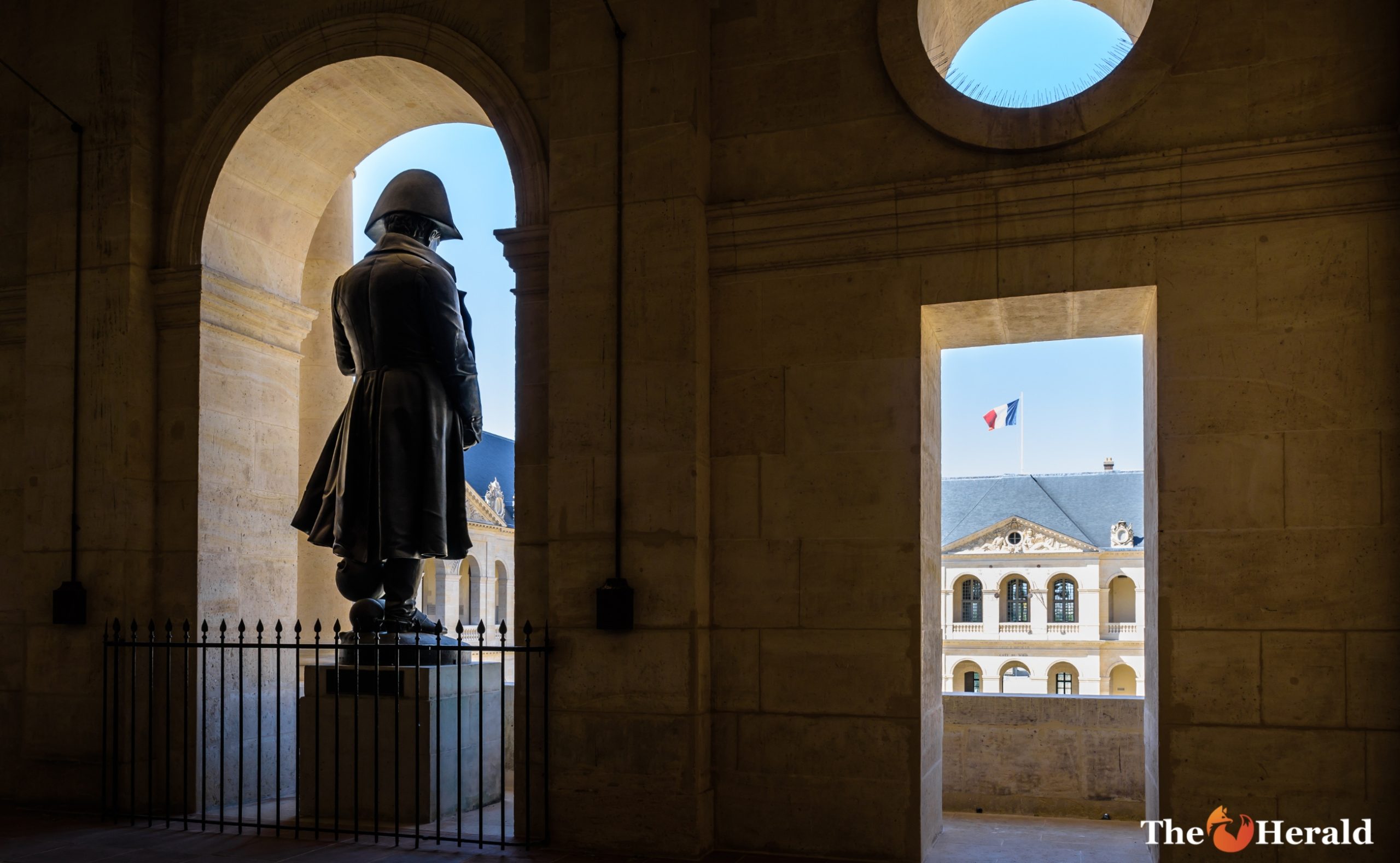
Ridley Scott combines the Emperor’s love life with his military feats, without thinking about politics. The film features Joaquin Phoenix and Vanessa Kirby.
Napoleon Bonaparte (1769-1821), an apathetic figure of the national power of France at the same time as a genius of war turned squaring man, survives in a legend that does not disempower. As such, he holds the absolute record for sales of books and historical figures represented in cinema and television, the historian Antoine de Baecque having counted more than a thousand occurrences in these two media.
There are two myths that prevail in the cinema. One, very real, is Abel Gance’s 1927 monster film, a romantic and lyrical masterpiece dilapidated over time in about twenty versions. And of which we should have a better idea by June 2024 at the end of the fourteen years that its reconstruction lasted. The other, ghostly, that of Stanley Kubrick, in a way the Napoleon of cinema, dreams definitively and burns to realize, as early as the 1960s (180-page script, iconography of 17,000 photos…), before Metro-Goldwyn-Mayer put an end to its expensive campaign.
But, here comes Ridley Scott’s film. Which cannot be considered as a coincidence. The author of Alien (1979) and Blade Runner (1982) – his two best films to date – developed over time a slightly snoring taste for historical headliners. This led him from Christopher Columbus (1492, 1992) to the Gucci family (House of Gucci, 2021). Also, through the Roman Emperor Commodes (Gladiator, 2000) or the prophet Moses (Exodus: God and Kings, 2014).
There is therefore little surprise to see him attack, like the Duke of Wellington in 1815 during the Battle of Waterloo, this very ample part that is Napoleon. Unlike his compatriot, Scott, however, did not find the defect of the breastplate and obviously had trouble grabbing hold of his hero.
Leave a Reply