


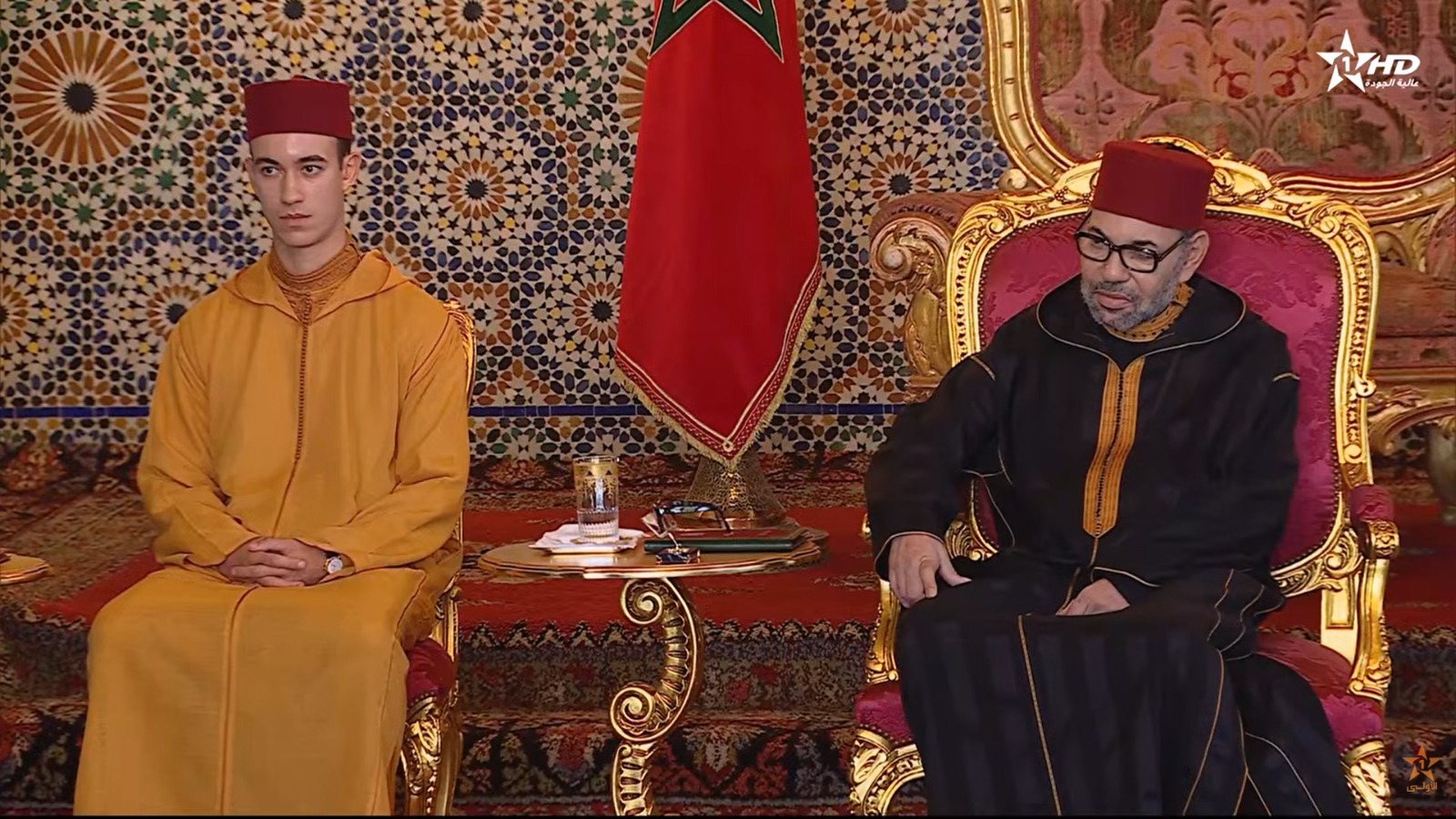
The day of November 25, 2026, marked a turning point in the trajectory of Morocco’s defense industry, not because of the signing of a single agreement, but because of the convergence of three decisive elements: direct royal supervision of the ceremony, the launch of a specialized agency, and the mobilization of a financial envelope approaching 22 billion dirhams. Together, these elements indicate that the file has moved beyond political announcements into a phase of institutional and financial structuring.
The Financing Architecture: Two Conventions, Three Levels of Mobilization
The first framework agreement, relating to the financing of the roadmap, was signed by Interior Minister Abdelouafi Laftit, Minister of Economy and Finance Fouzi Lekjaa, and other officials. The Caisse de Dépôt et de Gestion, the Hassan II Fund for Economic and Social Development, and Mohammed VI Polytechnic University are among the signatories. The second agreement aims to mobilize businesses and the financial sector, bringing together Bank Al-Maghrib, the Professional Group of Moroccan Banks, the CGEM, and the Casablanca Stock Exchange. This diversity of actors reflects the understanding that the defense industry cannot be built on public funding alone; it requires the engagement of the entire financial and private ecosystem.
The DIFAA Agency: From Plan to Institutional Implementation
King Mohammed VI chose the name “DIFAA” for the future Moroccan Defense and Security Industry Agency. It will be responsible for monitoring the commitments of public and private partners, promoting investment, and managing support mechanisms for the sector. Until its official creation, Ali Seddiki, Director General of AMDIE, has been tasked with preparing the operational implementation of the roadmap while retaining his position at the head of the agency.
Quantified Objectives: 40%, 50 Billion Dirhams, and 50,000 Jobs
The roadmap aims, by 2035, to enable manufacturers based in Morocco to cover 40% of the needs of the Royal Armed Forces and security agencies. It also seeks to generate at least 50 billion dirhams in annual revenue, of which more than 65% will come from exports, and to create at least 50,000 direct and indirect jobs. If achieved, these objectives would transform Morocco from an arms importer into an exporter, a shift that goes beyond economics to touch on the concept of defense sovereignty.
Targeted Sectors: From Drones to Artificial Intelligence
The targeted industries include drones and autonomous systems, land and naval systems, defense electronics, cyberdefense, and artificial intelligence. A national research and development ecosystem will be established, mobilizing the skills of Moroccans abroad. This orientation reflects the understanding that modern warfare increasingly relies on advanced technologies, and that investment in these fields can have spillover effects on the civilian sector.
Between Signature and Execution, a Distance That Requires Time
The signing of the two agreements before the King, the launch of the DIFAA agency, and the mobilization of 22 billion dirhams are all indicators that Morocco has effectively entered the defense industry phase through its institutional and financial doors. But the question that remains is whether these objectives will translate into concrete industrial products or remain confined to documents and speeches. The answer will depend on the new agency’s ability to coordinate efforts, attract technical partners, build competitive local supply chains, and on the private sector’s commitment to invest in this new field.
References
-
QNA. “Morocco launches roadmap to develop defense and security industries with $2.19 billion in funding.” November 25, 2026.
-
Le360. “King Mohammed VI chairs signing of two agreements on defense and security industry and creation of DIFAA agency.” November 25, 2026.
-
ACP. “Morocco: signing of two framework agreements on financing the roadmap for the development of the defense industry.” November 25, 2026.
-
TelQuel. “Defense and security industry: what you need to know about the two agreements signed in the presence of King Mohammed VI.” November 25, 2026.
-
Hespress English. “King Mohammed VI chairs signing of two agreements to finance Morocco’s defense industry.” November 25, 2026.