
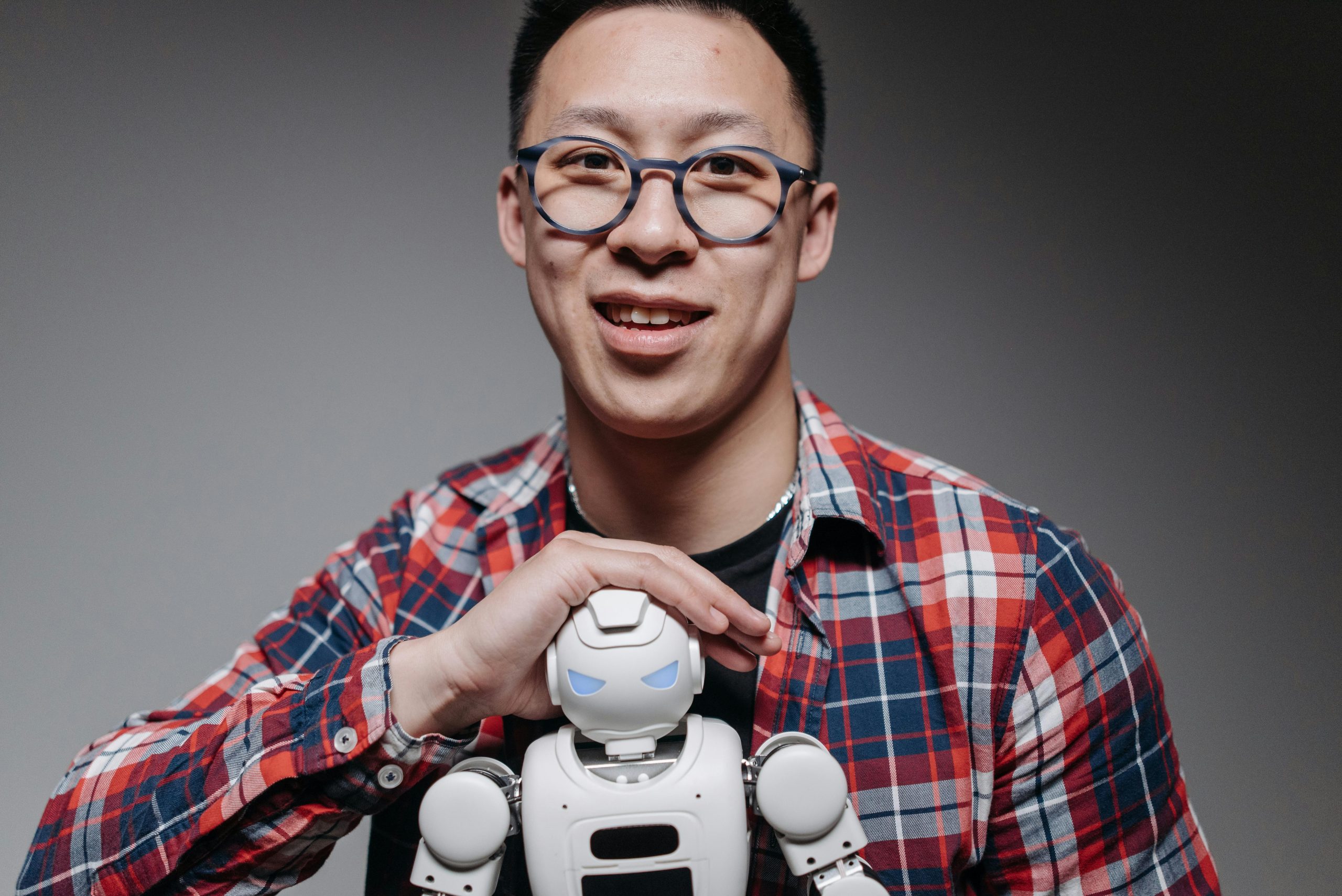
A legal earthquake that redefines the future of work, and sends shockwaves through Silicon Valley
I. The verdict that changes everything
At 9:00 AM Beijing time, the Supreme People’s Court of China released a judicial interpretation that legal experts are already calling “the most significant labor protection ruling of the 21st century.” The decision, effective immediately, declares it illegal for any company – foreign or domestic – to terminate an employee or reduce their salary solely because artificial intelligence or automation has made their role redundant.
The ruling did not emerge from a vacuum. It is the direct outcome of a landmark case that began in August 2025, when a quality engineer named Zhou Wei (full name withheld by court order) was systematically pushed out of his job at the AI firm “DeepTech” after a ChatGPT‑like algorithm began performing 70% of his duties.
For eight years, Zhou had been a model employee. Then, without warning, his title was demoted, his salary cut by 40%, and his responsibilities hollowed out – while he remained at the same desk. When he complained, the company fired him, citing “technological restructuring.”
The Hangzhou Intermediate Court ruled in Zhou’s favor in March 2026. Today, the Supreme Court made that ruling binding precedent for the entire country.
“Technological development is not an act of God,” the court wrote in its binding opinion.
“Companies that voluntarily decide to replace human beings with machines bear the full cost of that decision. They cannot pass it onto the worker.”
II. What the ban actually means – line by line
The new judicial interpretation creates three enforceable rights for every employee in China:
1. The right to “job survival”
Even if an AI system can now perform 100% of an employee’s tasks, the employer cannot unilaterally terminate that employee. The only legal options are:
Keep the employee in the same role with unchanged salary and benefits.
Offer a voluntary separation package negotiated with an independent labor union.
2. The right to reinstatement with back pay
If a court finds that a dismissal was motivated by automation (rather than genuine performance issues), the judge must order the employee reinstated and the employer must pay all back salaries from the date of dismissal.
3. The right to collective bargaining on automation
Companies with more than 500 employees are now required to notify and consult their works council before implementing any AI system that could affect job functions. Failure to do so makes the automation itself a labor violation.
Penalties for violation range from fines of up to 500,000 yuan ($69,000 USD) per affected employee to potential suspension of business licenses for repeat offenders.
III. The economic shockwave, tech giants in panic
Leaked internal documents from three of China’s largest tech companies – Tencent, Baidu, and Alibaba – reveal emergency board meetings held within hours of the ruling.
According to a source inside Alibaba’s HR department (speaking on condition of anonymity):
“We had planned to reduce our customer service headcount by 8,000 this year through AI chatbots. That plan is now impossible. We are looking at an additional $400 million in labor costs for 2026 alone.”
Industry analysts estimate that the ruling could increase aggregate labor costs for China’s tech sector by 15–25% over the next 12 months, effectively wiping out much of the efficiency gains that automation was supposed to bring.
But not everyone is unhappy. Chinese labor unions – traditionally seen as toothless – have hailed the decision as a “new charter for working people in the age of intelligent machines.” The All-China Federation of Trade Unions announced a nationwide campaign to educate workers about their new rights, starting next week.
IV. Global reactions – Europe watches, Washington fumes
Brussels: “A test case for the human‑centered economy”
The European Commissioner for Social Rights, Nicolas Schmit, issued a statement calling the Chinese ruling “a courageous experiment that we will study closely.” A working group has been formed within the European Commission to evaluate whether a similar “right to job survival” could be introduced under the EU’s Artificial Intelligence Act.
Washington: “An obstacle to innovation”
The White House National Economic Council responded more sharply. A spokesperson said: “Artificial intelligence is the defining technology of our era. China’s decision to handcuff businesses will only slow progress and benefit no one – least of all workers, who will lose global competitiveness.”
The American Chamber of Commerce in Beijing released a rare critical note, warning that the ruling “adds unpredictable legal risk” for the more than 7,000 US‑owned companies operating in China.
Global labor: “Finally, a voice for the replaced”
The International Labour Organization (ILO) in Geneva broke its usual diplomatic silence. Director‑General Gilbert Houngbo said: “For years, we have heard that automation is inevitable and that workers must simply adapt. China has just said: no – the law can adapt too. This is a historic moment for social justice in the digital age.”
V. What this means for you – whether you work in Shanghai, Detroit, or Berlin
Even if you do not live or work in China, this ruling matters. Here is why:
Multinationals will have to choose – A global company with operations in China cannot apply one labor standard in Beijing and a radically different one in London. Pressure will mount for harmonized rules.
Investors are recalculating – Financial analysts at Goldman Sachs issued a note today downgrading five Chinese AI firms, citing “increased labor rigidity.” However, they upgraded three European robotics companies, predicting that Western firms may relocate automation‑heavy operations out of China.
The moral precedent is set – For the first time, a major economy has legally declared that efficiency does not automatically trump employment. Other countries – from Germany to Brazil – are already studying the text.
In the words of Chinese labor lawyer and Harvard graduate Liu Ying:
“This is not an anti‑technology ruling. It is a pro‑human ruling. The machine must fit into society, not society into the machine.”
VI. The human story – Zhou Wei speaks
Late tonight, I reached Zhou Wei by phone at his small apartment in Shanghai’s Pudong district. He has just returned from his first full week back at work.
“I am not against AI,” he told me. “I use AI every day. But I am a human being with a mortgage, a child, and 20 years of experience. Being replaced by an algorithm without even a conversation – that is not progress. That is theft.”
Zhou did not ask for a promotion. He did not ask for a bonus. He asked only to keep the job he had done well for eight years. The court gave him that right – and 1.4 billion Chinese workers the same right.
“I never thought I would be the face of a revolution,” he said quietly. “But if this helps other people keep their dignity, then I am proud.”
VII. Looking ahead, what comes next
The Supreme Court ruling is not the final word. The Chinese legislature (NPC) is already drafting a formal Automation and Employment Protection Law, expected to be tabled before the end of 2026. The new law is likely to include:
Mandatory “human‑in‑the‑loop” provisions for any AI system making hiring or firing recommendations
An Automation Impact Fund – financed by a small tax on robotics and AI licenses – to provide re‑training and income support for displaced workers
A right to disconnect from AI‑driven productivity tracking after working hours
Critics on the left say the law does not go far enough – it does not cap the percentage of tasks that can be automated. Critics on the right say it goes too far – that it will drive investment out of China. But for the first time, the debate is no longer about if humans should be protected from machines, but how.
The beginning of a new social contract
For three decades, the dominant narrative was simple: technology advances, jobs disappear, workers retrain – or else. China’s Supreme Court has just thrown that narrative into the fire.
By ruling that a company’s desire for efficiency does not override a worker’s right to livelihood, the court has begun writing a new social contract for the age of artificial intelligence. It is a contract that says: machines should serve human flourishing, not human sacrifice.
The world will watch closely. Some will call it protectionism. Others will call it wisdom. But no one can call it unimportant.
Because if China can ban the replacement of humans by AI, the question is no longer “can it be done?”, it is “why hasn’t your country done it yet?”
Leave a Reply